A fire pit is one of the few garden buys where getting the size slightly wrong spoils the whole thing. Buy too big and you spend the evening edging your chair backwards, too hot on the front and shivering at the back. Buy too small and you have an expensive candle that dims the moment anyone sits more than a metre away. The good news is that sizing is not guesswork. A tape measure, a bit of chalk and ten minutes of thinking about how you actually sit outside will get you most of the way there.
Measure the patio or lawn area you would use for the fire pit and its seating — not the whole garden. A fire pit needs breathing room: the surface it stands on, the chairs, and a walkway past them if people need to get to the back door or the shed.
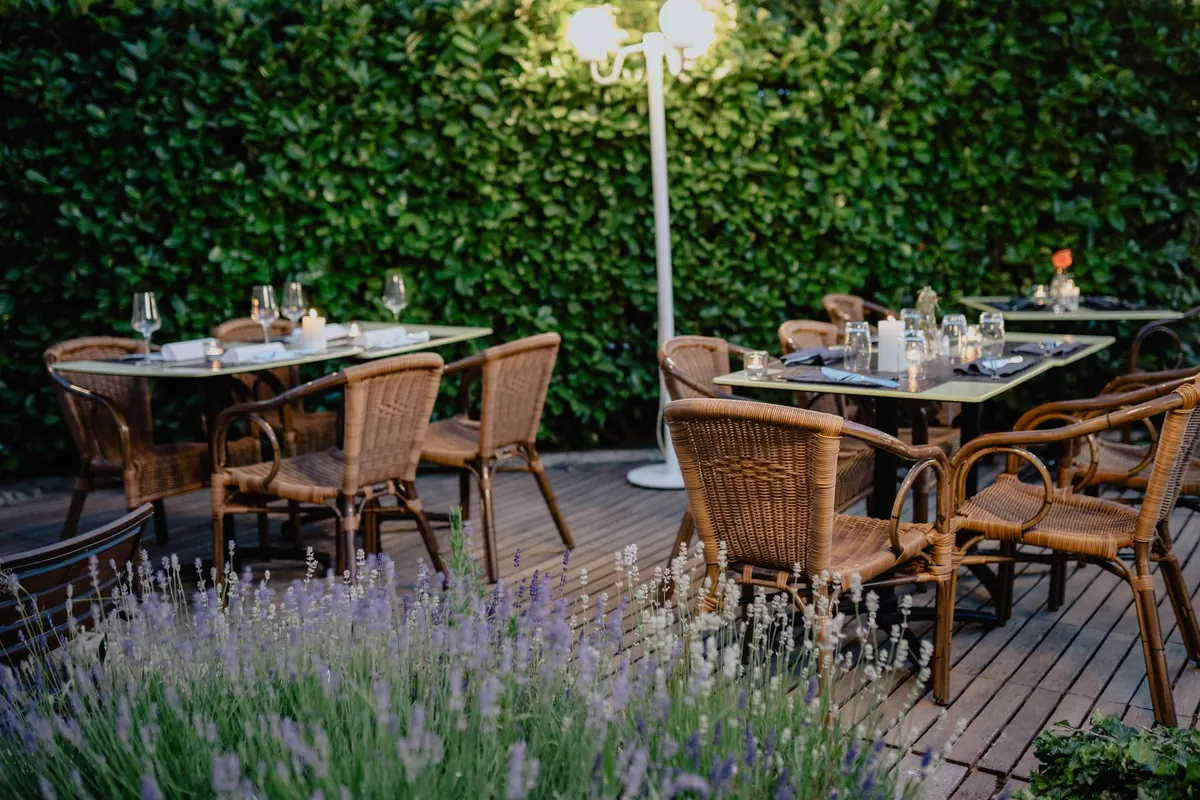
As a working rule, allow at least 90 cm between the rim of the fire pit and the front edge of the nearest chair. That is the minimum. Around 1.2 m is far more comfortable, particularly if you eat outside, because the people behind will want to lean forwards without their knees in the fire. Add another 60–80 cm behind the furthest chair for a path.
So a modest 3 m × 3 m patio can hold a fire pit and four chairs, but only just, and only if the pit is small. A 4 m × 4 m area comfortably takes a medium pit and six seats.
Anything over about 120 cm starts to behave like a small bonfire — lovely, but it needs a great deal of space and fuel, and the radiant heat becomes fierce close up.
Height decides where the heat lands and where the smoke goes.
A low bowl, roughly 30–45 cm from the ground, throws heat sideways at shin and knee height. That is pleasant if you are lounging in low chairs on a cool evening, less pleasant if you are sitting upright at a dining table with cold shoulders.
A table-height pit or a chiminea, around 60–90 cm, lifts the fire above your knees and lets the smoke rise clear of your face. If your garden is small, overlooked, or often breezy, this is usually the more sociable choice — you sit closer to the heat because there is less of it at floor level.
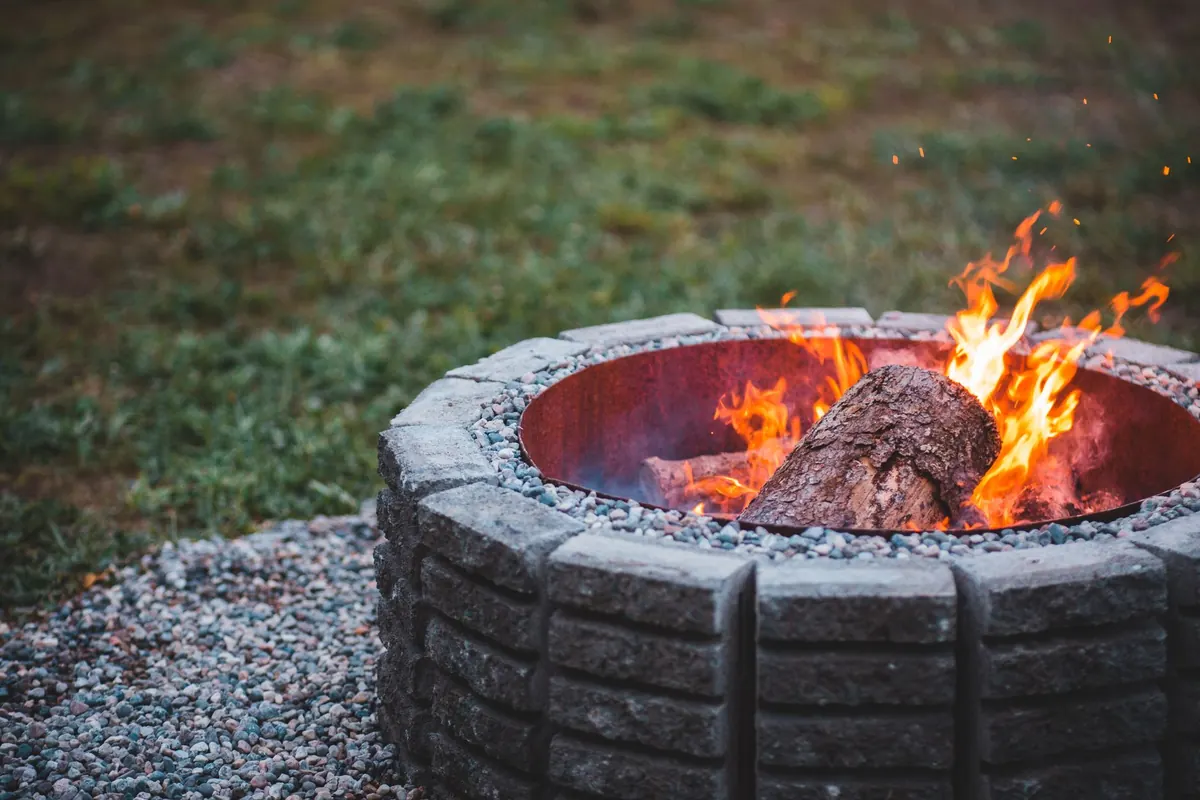
Raised pedestal models and built-in masonry pits sit higher again. They suit anyone who finds low garden chairs hard to get out of, and they scorch less grass because the fire is further from the ground. The trade-off is cost and permanence: once installed, it is staying.
Also look at bowl depth. A shallow, wide bowl gives off more heat and burns through fuel faster. A deeper, narrower bowl contains the fire, feels calmer in wind and lasts longer, but radiates less sideways.
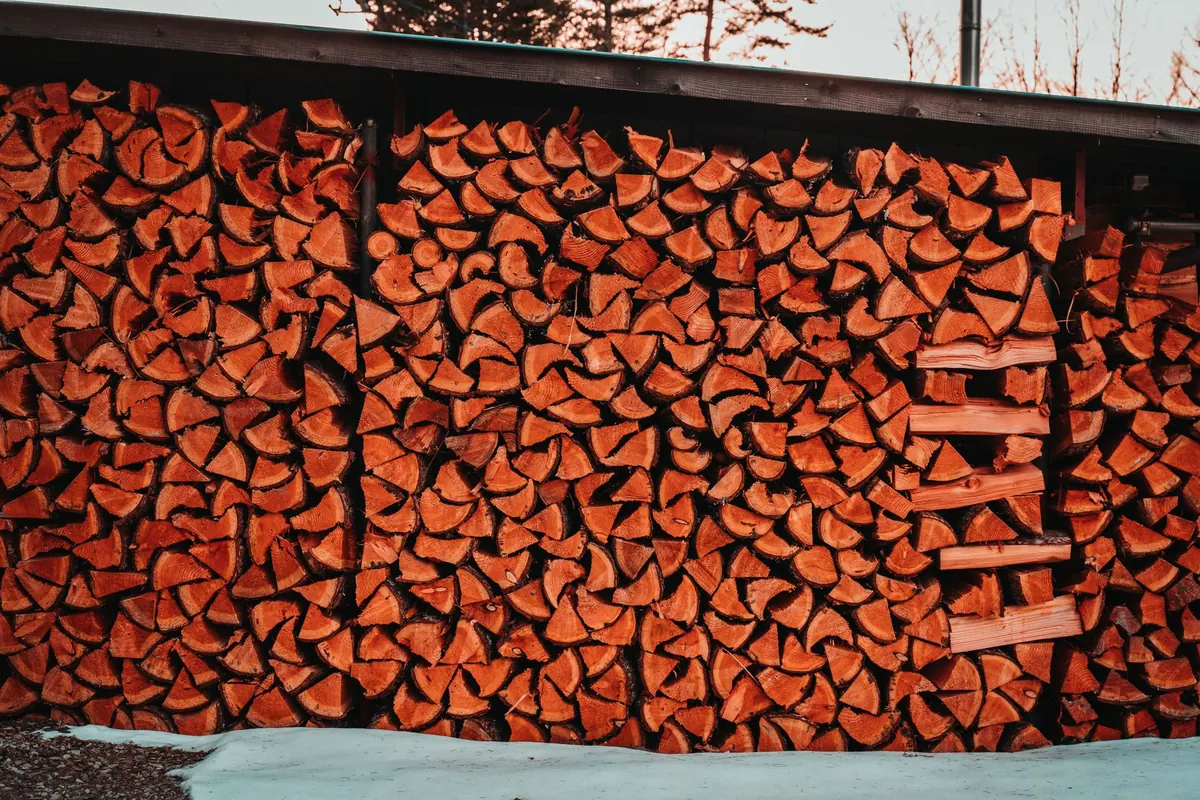
Wood needs room. Logs are long, flames are tall, sparks travel, and you need somewhere to put ash. If you want a proper log fire rather than a decorative flame, look at 70 cm across upwards. Keep the pit well clear of fences, shed walls, overhanging branches, shrubs and anything else that could catch — check for anything above as well as beside.
Charcoal burns hotter and cleaner in a smaller bowl, so a 50–60 cm pit is workable for four people, especially if you want to cook on it. Gas and bioethanol pits give you flames without smoke, which matters for small gardens, though the heat still needs clearance and the flames can be blown about in wind.
Before you buy, check where you live. In smoke control areas, which cover many towns and cities across the UK, you must burn authorised smokeless fuel or use an exempt appliance rather than an open wood fire. Your local council's website will say whether you are in one, and which appliances are exempt.
Even outside a smoke control area, persistent smoke that causes a nuisance can lead to complaints and council action under statutory nuisance rules, and some gardens have restrictions through tenancy agreements or deeds. If you are unsure how the rules apply to your property, ask your council or a qualified professional before spending money. Damp wood, wet leaves and treated timber all smoke heavily; dry, seasoned wood or smokeless fuel keeps the peace.
Most garden fire pits are used by two to five people for two hours at a time. A 75–80 cm pit at table height, in a garden with 1.2 m of clearance all round, will suit more UK gardens than anything larger. If you are torn between two sizes, choose the smaller one: it is easier to move, cheaper to feed, and you will sit closer to it.
Measure where the pit will live, mark where the chairs will go, check your local smoke rules, then buy. That way the fire ends up doing what it is for — keeping a small circle of people warm and outside for longer.
Photo: Erik Mclean / Pexels