Walk into any half-decent firewood supplier and you'll be offered two choices: kiln-dried or seasoned. Both are logs. Both burn. The difference shows up the moment you try to light them — in how quickly the fire catches, how much heat actually reaches you, and how often you find yourself scraping tar out of a flue or scrubbing soot off a fire pit. If you've ever stood over a smoking pile of wood wondering why nothing is happening, moisture is almost certainly to blame.
Freshly felled wood can be more than half water by weight. Every gram of that water has to be boiled off before the wood can release any heat, and the energy for that comes out of your fire. A damp log burns cool, smoulders, produces clouds of unburned smoke and coats your flue or chimney with creosote. A dry log burns hot and clean, with a bright flame and very little visible smoke.
This is why species snobbery misses the point. A well-seasoned log of ash beats a soggy lump of oak every time. Ash gained a reputation for burning well even when green, but "better than most when wet" is a low bar. Dry wood, whatever it is, outperforms wet wood without exception.
The number to aim for is under 20% moisture content on a freshly split face. Around 15–18% is the sweet spot for stoves and fire pits. Below about 12% the wood lights almost like kindling, which is wonderful for a quick fire and slightly less useful if you want a long, slow burn through the evening.
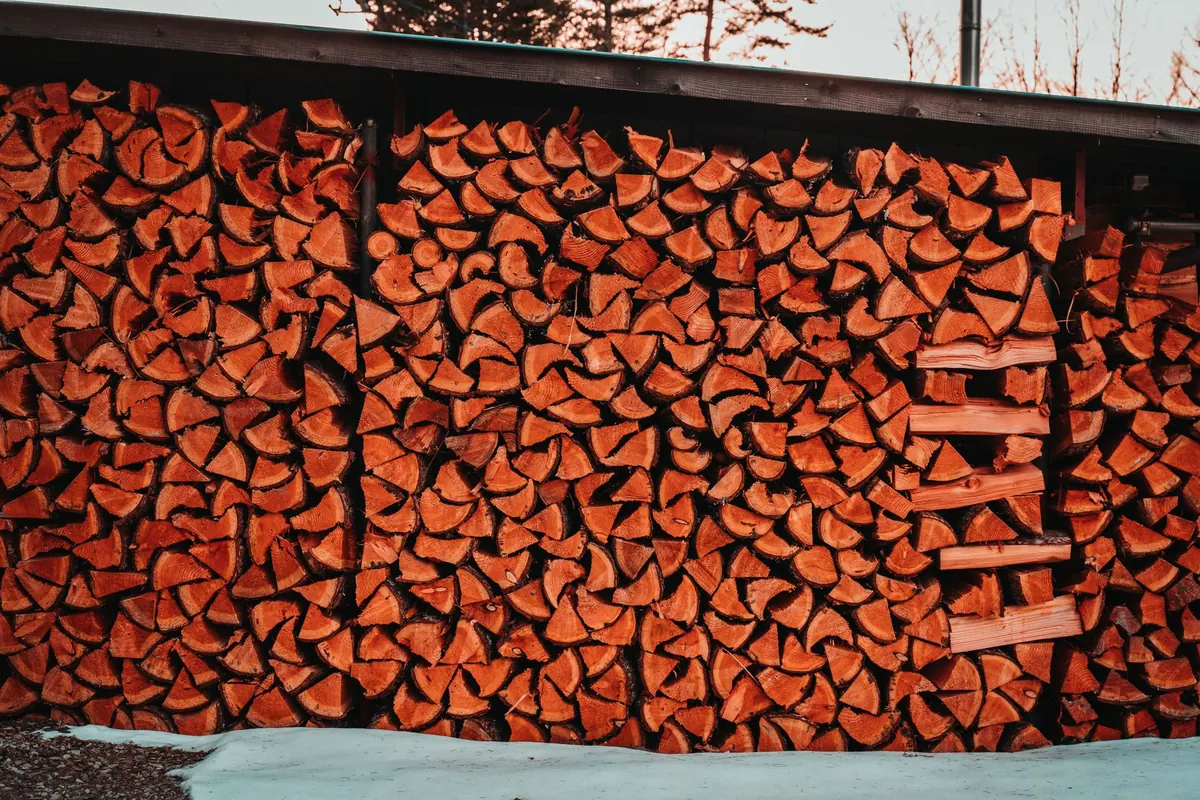
Seasoned wood has been left to dry in the air. Split it, stack it, and let wind and sun do the work. Time depends on species, split size and weather. Softwoods such as pine, spruce and larch may be ready in under a year. Dense hardwoods like oak can take two years, sometimes three for thick rounds.
Stacking matters as much as time. Keep the pile off the ground on pallets or rails, leave gaps between logs, orient it so the prevailing wind blows through it, and cover only the top. A tarpaulin draped down the sides traps damp air and turns a woodpile into a mushroom farm. Ideally, split bigger rounds down to a hand-span thickness — the drying happens through the split surfaces, not the bark.
Kiln drying does in days what a woodpile does in years. Logs are loaded into a large chamber and warm, moving air is circulated through them until the moisture is driven out — typically landing somewhere between 10% and 20%, and checked rather than guessed. You can buy kiln-dried ash, birch, oak or a mixed softwood load, so the kiln is a process, not a species. Read the label.
The appeal is certainty. Kiln-dried logs arrive ready to burn tonight, light without heroic amounts of kindling, and behave consistently bag after bag. The downsides are cost, the fuel used to run the kiln, and the plastic netting that comes with it. There's also a storage point people miss: kiln-dried wood is thirsty. Leave it out in the rain, or in a damp shed with no airflow, and it will creep back up towards 20% surprisingly quickly.
There's no single winner — it depends on what you're burning in and how you're set up.
Large parts of urban Britain sit inside Smoke Control Areas, where you may only burn authorised fuels or use an exempt appliance, and burning wet wood isn't permitted. There are also restrictions on selling wet wood in small quantities in England. If you're not sure whether your home falls inside one of these areas, your local council will tell you — it's a two-minute phone call that saves a fine later.
Buy a moisture meter. They cost very little and they end the guesswork completely. Bring a day's worth of logs indoors to sit near the fire before you burn them, but don't stack them against the stove for weeks — that's a fire risk and it dries them to the point of burning too fast.
Order kiln-dried wood a few weeks before you need it, and store it somewhere genuinely dry with airflow around the stack. If you're seasoning your own, split small, stack early in the year, and be patient. Dry wood isn't just about a prettier flame; it's the difference between a fire that heats you and one that only smokes at you. Get the moisture right and everything else — the lighting, the heat, the clean glass, the flue you don't have to sweep twice — falls into place.
Photo: lil artsy / Pexels